See it in Action
To deploy the spiffe-demo-app, you’ll need Helm installed.
Deploy a demo app into the k8s cluster you’ve been using:
helm repo add spiffe-demo https://spirl.github.io/spiffe-demo-app

helm -n spiffe-demo install spiffe-demo spiffe-demo/spiffe-demo-app --create-namespace
Finally, open a tunnel to access the demo app from your browser:
kubectl -n spiffe-demo port-forward svc/spiffe-demo-service 8080:80
You can now access the app by visiting http://localhost:8080. Feel free to play around and view the certificates and JWT tokens being minted and served by Defakto.
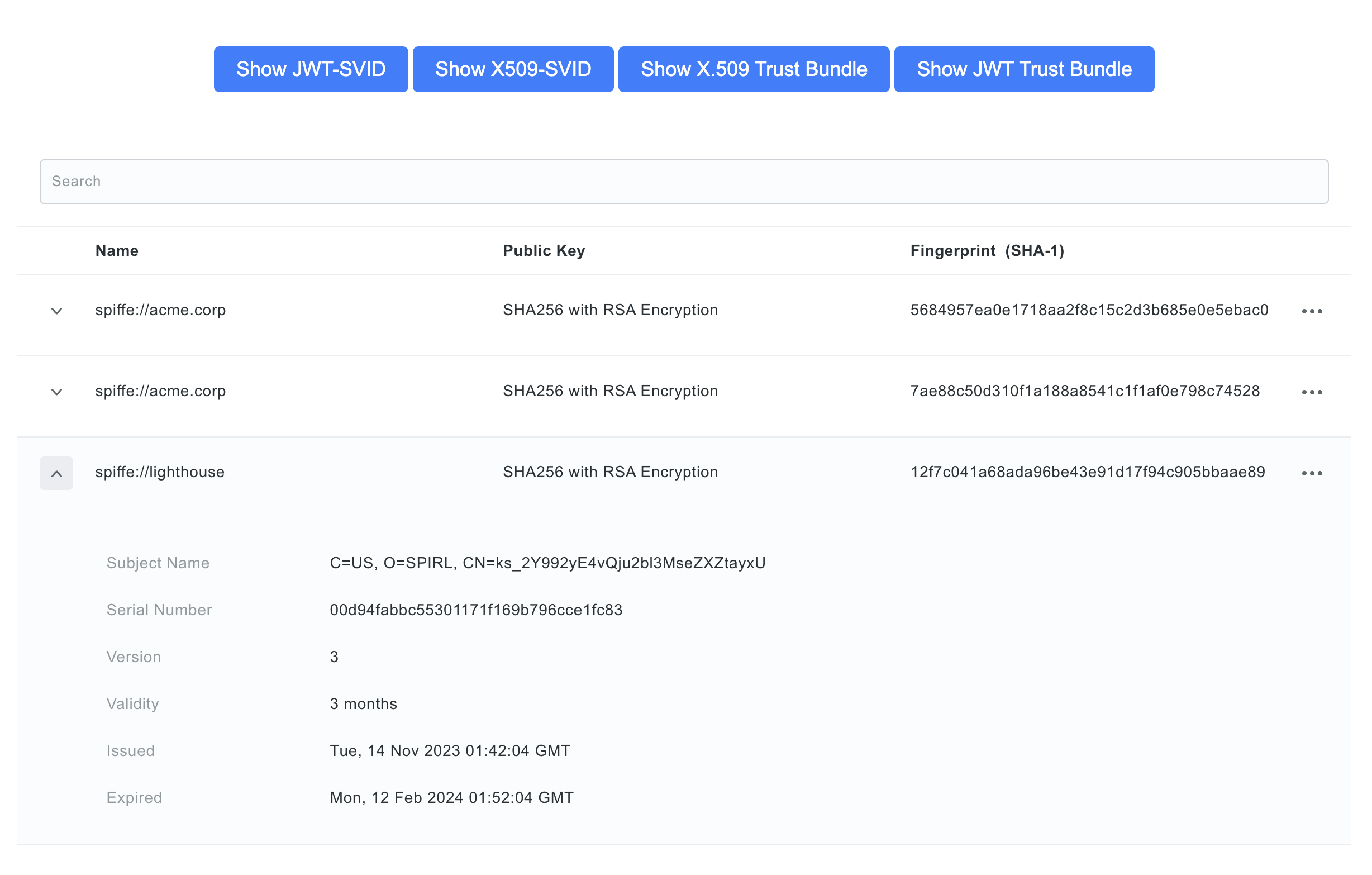
Verify SVIDs from the CLI
For a CLI-based verification, deploy a one-shot pod using the spirldbg utility. The pod needs the k8s.spirl.com/spiffe-csi: enabled label so the Defakto admission controller injects the Workload API socket.
apiVersion: v1
kind: Pod
metadata:
name: svid-checker
namespace: spiffe-demo
labels:
  k8s.spirl.com/spiffe-csi: "enabled"
spec:
restartPolicy: Never
containers:
- name: svid-checker
  image: ghcr.io/spirl/spirldbg:v0.0.18
  command:
  - spirldbg
  - svid-x509
  - --spiffe-endpoint-socket=unix:///spirl-agent-socket/agent.sock
Apply it and read the output:
kubectl apply -f svid-checker.yaml
kubectl -n spiffe-demo wait --for=jsonpath='{.status.phase}'=Succeeded pod/svid-checker
kubectl -n spiffe-demo logs svid-checker
You should see output like:
Successfully received x509 SVID
SPIFFE ID: spiffe://example.com/cluster-1/ns/spiffe-demo/sa/default
Not before: 2026-01-01T00:00:00Z
Not after:  2026-01-02T00:00:00Z
Validity:   24h0m0s
...
To fetch a JWT-SVID instead, replace svid-x509 with svid-jwt and add --audience <your-audience>.
For other example workloads that request an SVID see the Defakto Examples Repo.